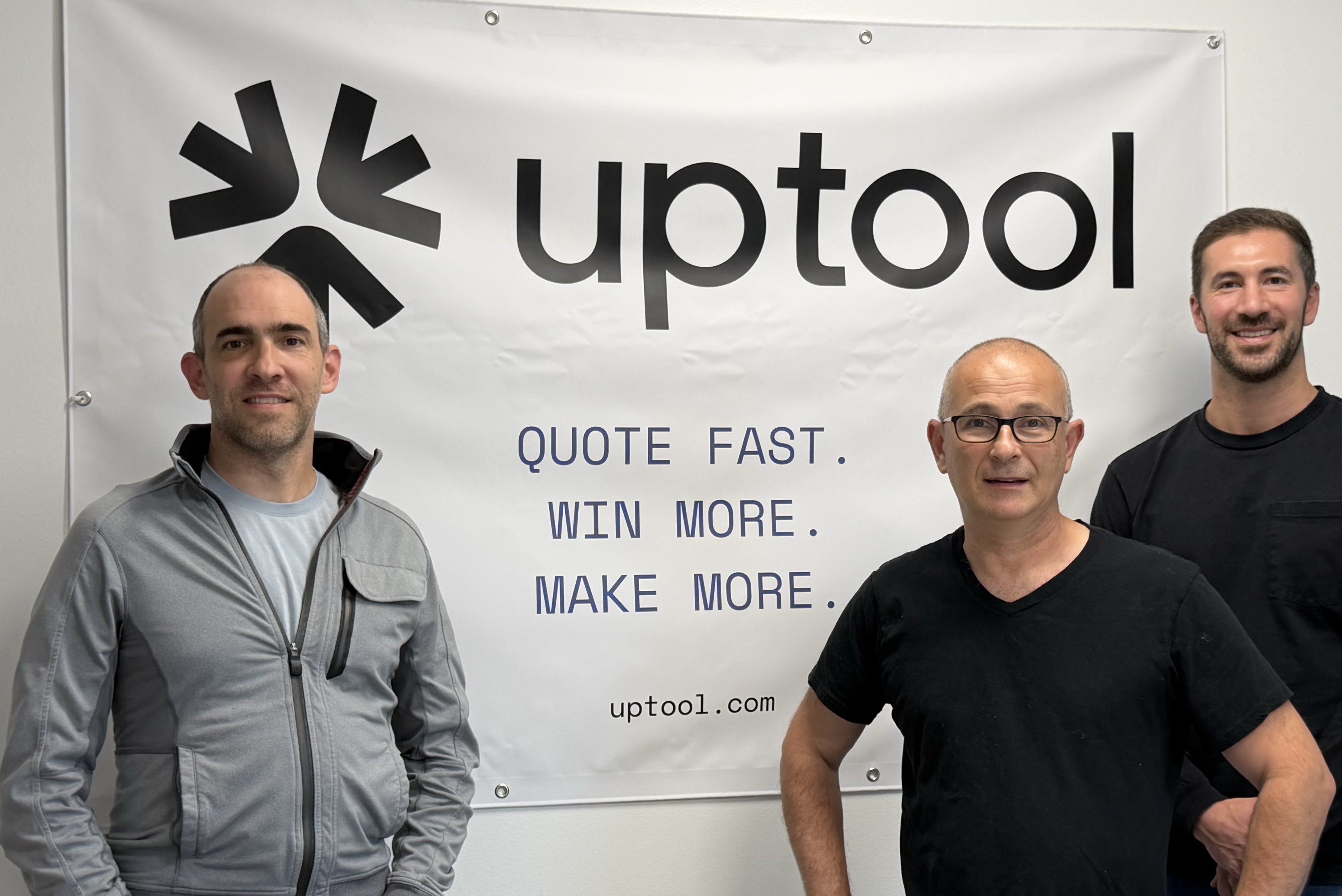
Patricio (Pato) Echagüe has joined Uptool as the new Chief Technology Officer. He brings nearly two decades of Silicon Valley engineering and company-building experience, most notably as co-founder of Split Software, which he helped grow from a two-person idea to a company acquired by Harness in 2024.
The marketing team sat down with Pato to talk about what drew him to Uptool, his background, his approach to engineering leadership, and what he's focused on in his first months on the job. If you want to connect with Pato follow him on LinkedIn.
Q1: What first excited you about Uptool?
When I sold my company back in June 2024, a recruiter reached out about a CTO and co-founder opportunity here, and I was genuinely intrigued from that very first conversation. I was in the middle of giving my team a proper transition after the sale, so I kept a close eye on what Benny and the team were building from the sidelines while I wrapped things up. That runway ended up working in my favor.
Around that same time, I spent a stretch at a frontier foundation AI lab, and it sharpened my thinking in a way I didn't fully expect. It became clear that a pure application-layer software company wasn't built to last. Every few months, another pure-play software company was getting outflanked by the next leap in AI models. Uptool is different. Its software is anchored to a physical domain, to real machine shops and real parts moving through real factories, and that combination is exactly the kind of durable thesis I wanted for whatever I built or joined next.
But these only get you so far. What sealed it for me was the people. Benny and Alex treated me with a level of openness and genuine curiosity throughout the process that I don't take for granted. They put real effort into understanding who I am, not just what I'd built before, and they operate with a transparency that mirrors how I like to work. And honestly, beyond the role itself, there was something simpler pulling me in too: I love building companies. The culture, the rituals, the thousand small technology and business decisions that shape what a place becomes. I was ready to do all of that again.
Q2: Tell us about your background. Where are you from, how did you get into engineering?
I grew up in rural Argentina and started programming at nine years old, which even at the time felt less like a hobby and more like an early obsession. I had a small lab in our basement where I'd take apart anything with a circuit board just to understand how it worked. That instinct, to open things up and figure out the mechanics underneath, has basically never left me. Eventually I moved to the city to study computer science, and right before heading to the US, I made my first real attempt at starting a company: a home automation idea that sent data to devices over the powerline. It didn't take off, but it planted the entrepreneurial itch that's shaped everything since.
I came to the US in 2007 to join Google, and I fell in love with Silicon Valley almost immediately. The energy, the ambition, the sense that anything was buildable. But working for a big enterprise wasn’t the right fit, and I quickly realized I wanted to be somewhere I could feel the impact of my own work every step of the way. So I moved to smaller and smaller companies. In 2010, I joined DataStax to help build a distributed database on Apache Cassandra. In late 2011, I became a founding engineer at RelateIQ, and that chapter changed everything for me. It's where I truly learned what it means to build a company from the inside, not just write code for one. The founders were remarkably open about funding and financials, a transparency I've carried into every company I've touched since. RelateIQ also introduced me to people like DJ Patil, and established a network of other Silicon Valley figures who shaped how I think about leadership.
When RelateIQ was acquired, I set out to turn the relationships I'd spent years nurturing in the VC community into something of my own. That became Split Software, which I started with two former teammates. Our mission was simple to say but hard to do: help product and engineering teams ship software faster and more safely. Split is, without question, my biggest achievement to date. We raised $110 million from top-tier VCs and, nearly nine years after we started, sold the company to Harness in 2024. It was a long, winding, occasionally terrifying road, and I wouldn't trade a mile of it.
Q3: What's your engineering philosophy?
I'm drawn to small companies because of the pace and the clarity. Information flows through the path of least resistance, decisions happen fast, and everyone stays laser-focused on what actually matters to the customer. I try to run teams on a principle of extreme ownership and delegation, where every engineer holds real, absolute responsibility for what they're building. That only works if there's trust underneath it, so I spend a lot of energy making sure teams genuinely enjoy working together and feel safe taking risks.
Hiring is where that philosophy really shows up. I don't just look at a resume and a set of skills. I try to understand what makes each person unique, what extraordinary things they bring that nobody else on the team does, and how that fits into the larger picture we're building. Above almost everything else, I look for intellectual curiosity. Give me someone who genuinely wants to understand how things work, and I can teach them almost anything else. I’m excited to build out the team here at Uptool.
Q4: What are you most excited to tackle in your first 6 months?
My first priority is immersion: catching up quickly on everything the team has already built, getting to know every person well, and learning an industry, manufacturing, that's genuinely new to me. I'm finding there's something energizing about being a student again, and I'm soaking up as much as I can every single day.
Looking out over the first six months, I want to help the team build faster, higher-quality software by putting the newest AI tooling directly into developers' hands. I'm also focused on helping deliver a new product that I believe will meaningfully shift the company's trajectory and ripple out into the broader industry. I'll have more to share on that in the coming months, and I think it's going to be worth the wait.
And if we get the sequencing right, growth follows naturally. We'll need to scale the team to match our momentum, all while doing what every company today has to do: growing smart and keeping AI spend under control.
Q5: What's something people might not expect about you?
Even though I love geeking out over new technology, I actually thrive when I'm out in the field with our sales team, on customer calls or visiting machine shops in person. Connecting directly with users and building genuine relationships feeds the entrepreneur in me.
True innovation happens when you sit at the intersection of deep technological capability and real customer empathy. To build something great, you have to truly understand the fundamental problems people are facing every day, and then use your technology to solve those problems while completely hiding the internal complexity of the software. When you pull that off, the product feels like magic. So while I’m a technologist at heart, you’ll often find me right where the tech meets the customer.
Please join us in welcoming Pato to the Uptool team!